
Outsourcing has become a strategic move for businesses looking to reduce operational costs, improve efficiency, and focus on core competencies. From customer support to data processing and back office services, companies across industries rely on Business Process Outsourcing providers to scale operations and maintain service quality.
However, selecting the right outsourcing partner is not a decision to take lightly. The success of your outsourcing strategy depends heavily on choosing a vendor that aligns with your operational goals, compliance requirements, and long term growth plans.
Many organizations rush into outsourcing agreements without performing thorough vendor due diligence. This can lead to communication breakdowns, security concerns, service quality issues, or unexpected costs.
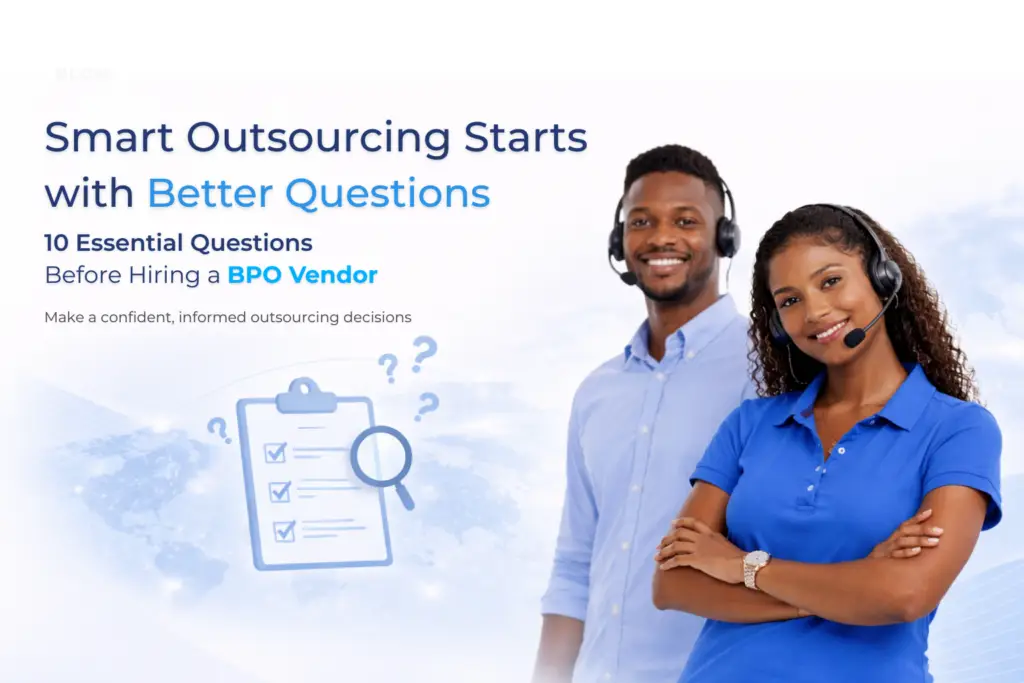
If you are evaluating outsourcing providers, understanding what to ask before hiring a BPO vendor is critical.
This guide provides a practical checklist of the most important questions businesses should ask before partnering with a BPO provider. These questions will help you assess vendor capabilities, transparency, and reliability before signing an outsourcing contract.
Why Vendor Due Diligence Matters in BPO Partnerships

Vendor due diligence helps businesses evaluate potential outsourcing partners beyond marketing claims. It allows decision makers to verify operational capabilities, assess risk factors, and ensure the vendor can deliver consistent service quality.
Proper BPO vendor evaluation helps you:
- Identify reliable outsourcing partners
- Protect sensitive business and customer data
- Clarify service level expectations
- Avoid hidden costs and contract disputes
- Ensure long term scalability
- Improve collaboration and communication
Without a structured due diligence process, businesses risk selecting vendors that cannot meet performance or compliance expectations.
The following questions serve as a comprehensive checklist for evaluating outsourcing providers.
1. What Experience Do You Have in Our Industry?
Industry experience plays a major role in outsourcing success.
A BPO vendor familiar with your sector understands common challenges, customer expectations, and compliance requirements. This reduces onboarding time and improves service quality.
When evaluating a provider, ask questions such as:
- How long have you served clients in our industry?
- What types of services do you currently deliver for similar businesses?
- What tools and workflows do you use to support these services?
Industry familiarity ensures the outsourcing partner can integrate smoothly into your operations without a long learning curve.
2. What Service Level Agreements Do You Offer?
Service Level Agreements or SLAs define performance expectations between your business and the outsourcing vendor.
Clear SLAs help ensure accountability and measurable service quality.
Key SLA components may include:
- Response time
- Resolution time
- Customer satisfaction metrics
- Error rates
- Quality assurance standards
Ask the vendor how they monitor performance metrics and what happens if SLA targets are not met.
Well defined SLAs protect both parties and help maintain consistent service delivery.
3. What Data Security Measures Do You Have in Place?
Data security is one of the most important factors when outsourcing business processes.
BPO providers often handle sensitive information such as customer records, financial data, or proprietary business insights. Any security vulnerability can expose your organization to serious risks.
During vendor due diligence, verify:
- Encryption protocols
- Access control policies
- Network security systems
- Employee data handling policies
- Disaster recovery procedures
You should also confirm whether the provider follows international data protection standards.
4. What Compliance Certifications Do You Hold?
Compliance certifications demonstrate that a BPO provider follows recognized industry standards for security, privacy, and operational practices.
Some commonly recognized certifications include:
- ISO certifications
- SOC compliance
- GDPR compliance for data protection
- PCI DSS for payment related data
Asking about compliance certifications helps verify that the outsourcing vendor follows best practices in information security and operational governance.
This step is particularly important for industries such as finance, healthcare, and ecommerce.
5. Where Is Your Workforce Located?
Workforce location plays an important role in outsourcing operations.
Businesses should understand where the BPO provider’s teams are based and how this affects communication, time zones, and service availability.
Important questions include:
- What countries or regions host your delivery centers?
- Are teams dedicated or shared across clients?
- What shift schedules are available?
- How do you manage workforce continuity?
A transparent explanation of workforce structure ensures your outsourcing partner can support your service hours and operational requirements.
6. How Do You Handle Communication and Reporting?

Communication protocols are often overlooked during vendor selection, yet they are crucial for successful outsourcing partnerships.
Clear communication structures help prevent misunderstandings and ensure both teams stay aligned.
Ask potential vendors about:
- Reporting frequency
- Performance dashboards
- Project management tools
- Dedicated account managers
- Escalation processes
Regular reporting and structured communication channels improve transparency and strengthen long term collaboration.
7. What Is Your Onboarding Process?
A structured onboarding process ensures a smooth transition when outsourcing business operations.
Without proper onboarding, vendors may struggle to understand your workflows, internal systems, and service expectations.
Ask BPO providers to explain their onboarding approach, including:
- Knowledge transfer methods
- Documentation requirements
- Training programs for agents
- Pilot testing phases
- Timeline for full deployment
A clear onboarding framework helps minimize disruptions and ensures services begin efficiently.
8. What Are Your Pricing and Payment Terms?
Cost savings are often a key motivation for outsourcing, but pricing transparency is equally important.
When reviewing payment terms, businesses should look beyond the base service price and understand the complete cost structure.
Important pricing considerations include:
- Monthly service fees
- Per agent pricing
- Setup costs
- Technology charges
- Performance incentives or penalties
You should also confirm payment schedules, contract duration, and cancellation policies before finalizing an outsourcing agreement.
Transparent payment terms reduce the risk of financial misunderstandings later.
9. Can Your Team Scale With Our Business?
Scalability is one of the biggest advantages of outsourcing.
However, not every vendor has the capacity to scale operations quickly as your business grows.
Ask outsourcing providers about:
- Maximum team expansion capacity
- Hiring timelines
- Infrastructure availability
- Seasonal demand management
- Multi service capabilities
A scalable BPO partner can support business growth without requiring frequent vendor changes.
10. What Is Your Agency Reputation?
Reputation and reliability should always be part of the vendor due diligence process.
Before partnering with a BPO service provider, review their market presence and client feedback.
You can evaluate reputation through:
- Client testimonials
- Online reviews
- Industry recognition
- Years of operation
- Long term client relationships
A well established outsourcing agency with a proven track record is more likely to deliver consistent service quality.
Additional Outsourcing Contract Tips for Businesses
Beyond asking the right questions, businesses should also review key contract elements carefully before finalizing any outsourcing partnership.
Important contract considerations include:
- Scope of services
- Confidentiality clauses
- Intellectual property protection
- Termination terms
- Dispute resolution processes
Having clear contractual terms ensures both the client and vendor understand expectations and responsibilities from the beginning.
Working with experienced outsourcing providers can simplify this process and ensure a smooth collaboration. If you are looking for a reliable outsourcing partner, the team at VLBPO is ready to help. Contact us today to discuss your outsourcing requirements and explore solutions tailored to your business needs.
Choosing the Right BPO Partner
Finding the right outsourcing partner requires careful evaluation, transparent communication, and a clear understanding of your operational needs.
By asking the right questions and performing proper vendor due diligence, businesses can avoid common outsourcing pitfalls and build long term partnerships that deliver measurable results. For additional guidance, click here to read this helpful resource on choosing the right BPO partner
Organizations that invest time in evaluating potential vendors often benefit from improved service efficiency, lower operational costs, and stronger customer experiences.
If your company is exploring outsourcing solutions, working with a trusted provider can make the transition significantly easier.
At VLBPO, businesses gain access to experienced outsourcing professionals, scalable service models, and structured onboarding processes designed to support long term growth. If you are evaluating outsourcing opportunities, connecting with the team at https://vlbpo.com/ can help you explore solutions tailored to your operational needs.
FAQ
Why is vendor due diligence important when hiring a BPO provider?
Vendor due diligence helps businesses verify a provider’s capabilities, security standards, and operational reliability before signing a contract. This process reduces risks and ensures the outsourcing partner can meet service expectations.
What should be included in a BPO vendor evaluation checklist?
A BPO vendor evaluation checklist should include industry experience, service level agreements, data security protocols, compliance certifications, pricing transparency, workforce location, scalability, and communication processes.
How do service level agreements impact outsourcing success?
Service level agreements define measurable performance standards such as response times, resolution rates, and service quality benchmarks. They help maintain accountability between the client and outsourcing provider.
How can businesses verify a BPO vendor’s data security practices?
Businesses can review security policies, encryption standards, access controls, compliance certifications, and disaster recovery plans to ensure the outsourcing provider follows strong data protection practices.
What factors should businesses consider before signing an outsourcing contract?
Before signing a contract, businesses should review pricing structure, service scope, confidentiality clauses, termination policies, compliance standards, and scalability options offered by the vendor.